

Imagine walking down a busy street and spotting a vibrant storefront sign that immediately draws you in—that’s retail signage at work. At its core, retail signage refers to any visual display—like storefront signs, banners, or digital screens—designed to catch your attention, share useful info, and nudge you toward making a purchase. It’s more than decoration; it’s a silent salesperson that influences your decisions from the moment you see it.

The power of great signage is clear. A well-thought-out sign doesn’t just stop your scroll—it reels you into the store. Once inside, directional signs help you navigate aisles, while promotional signage highlights deals, guiding your shopping journey from start to finish.
Exterior & Outdoor Signage
Exterior signage is your store’s welcome mat—it grabs attention and invites customers in. Let’s explore the top types and why they work so well.
1. Storefront Signs – Channel Letters

Channel letters are three-dimensional signs shaped like letters or logos, typically crafted from aluminum and illuminated with LEDs.
Front-lit: Light shines through the face—great for bold visibility, day and night.
Halo-lit (Reverse-lit): Letters cast a soft glow on the wall behind them, offering a sleek, upscale vibe.
Open-face & Combination: Reveal the lighting inside for a vintage or dramatic effect; combination styles mix front and halo lighting.
Why it works: Customizable, durable, and visible both day and night, channel letters elevate your brand image and ensure your storefront stands out.
2. Blade (Projecting) Signs

These signs stick out perpendicular from the building—perfect for catching the eye of passing foot traffic.
They’re often double-sided, so they’re visible from both directions.
They pop in crowded streets and mall corridors, where flat signs can get lost.
Customizable in materials (aluminum, wood, LED) and shape—ideal for showcasing unique branding.
Why it works: Blade signs boost visibility by standing out in dense pedestrian environments and help guide customers to your door.
3. Monument & Pylon Signs

These are freestanding signs often seen near parking lots or at plaza entrances.
They serve as landmark markers, making your business easy to locate from a distance.
Durable and customizable in height/materials, they can display business names, logos, or directories prominently.
Why it works: Excellent for multi-tenant locations, monument and pylon signs catch drivers’ attention and offer a strong brand presence even before customers approach.
4. A‑Frame (Sandwich) Boards
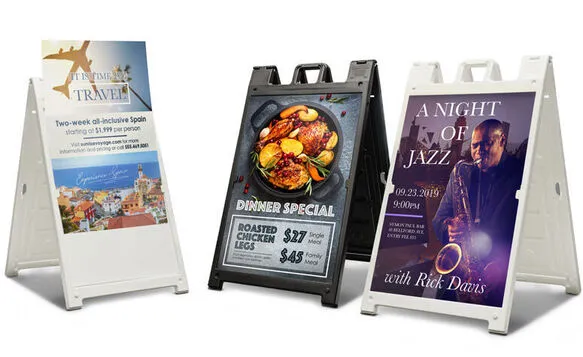
These portable, sidewalk signs are perfect for promotions or daily specials.
Simple, cost-effective marketing tools—easy to update and move around.
They capture impulse foot traffic, especially in busy walkways or outdoor cafes.
Why it works: With minimal investment, A-frames deliver big results by bringing messages directly to pedestrian level—great for last-minute offers.
5. Window Graphics

These include decals, perforated films, and clings applied directly to storefront windows.
They blend decoration and function—display promotions while adding style.
Cost-effective and flexible—they can be changed with seasons or campaigns.
Why it works: Maximize window space with branding or messaging that’s visible up close and from afar, without blocking natural light.
6. Billboards & Flags/Hoardings

Think large banners, flags, or hoarding boards—used for powerful messages and high-impact visuals.
Billboards work great along busy roads for brand awareness.
Flags and hoardings are ideal for temporary campaigns or event-driven promotions.
Why it works: These large-format signs capture attention quickly, making them perfect for announcing store openings, sales, or seasonal campaigns.
Interior Signage
Once customers walk in, interior signs guide them, inform them, and highlight what matters—helping turn browsers into buyers.
1. Wall‑Mounted & Overhead Signs

These are your store’s navigational tools, helping customers move around with ease:
Wall‑mounted signs display department names, brand messaging, or important info (often in snap frames or sleek acrylic) and suit large, open spaces.
Overhead signs hang above aisles or zones and are highly visible from a distance, making it easy for shoppers to locate what they want.
Why it works: They act like friendly guideposts—keeping your store easy to explore and helping shoppers feel confident about where to go.
2. Shelf & Countertop Signs

Think of these as mini billboards placed right where decisions happen:
Shelf signs (a.k.a. shelf-talkers) attach to product shelves to spotlight prices, discounts, or benefits; they’ve also been shown to boost impulse purchases.
Countertop signs (like tabletop posters, flyers, or table tents) live at checkout counters, encouraging last-minute add-ons or event sign-ups.
Why it works: They deliver the right info right when it counts—nudging shoppers into making decisions in the moment.
3. Poster Stands & Floor Graphics

Bold, attention-grabbing visuals that punctuate your aisles and guide traffic:
Poster stands and easels hold large-format promotional posters—perfect for seasonal sales, new launches, or brand messaging—with classy frames that catch the eye.
Floor graphics are decals stuck to the floor—they’re fun, can’t be missed, and can direct shoppers or highlight deals.
Why it works: They disrupt visual “noise,” reinforce messaging at key spots, and gently steer shoppers through the store.
Promotional Signage
These signs are all about excitement and urgency—perfect for announcing sales, events, or special offers in a visually engaging way.
1. Banners & Event Flags

Think big to stand out: banners and flags grab eyes outdoors and indoors with ease.
Banners: Made from vinyl, mesh, or fabric, they’re ideal for announcing sales, grand openings, or seasonal events. They’re large, customizable, and reusable—just swap designs as needed.
Event flags (feather, teardrop, pole flags): Tall and fluttering, they shine in parking lots or at entrances, drawing attention from a distance.
Why it works: Their scale and movement instantly grab focus—ideal for promoting time-sensitive events or directing foot traffic.
2. Sales & Discount Signs

Short, snappy, and persuasive—these signs are designed to drive impulse buys.
Include phrases like “50% Off”, “Limited Time Only”, or “Buy One, Get One” prominently.
Use colors like red or orange to signal urgency and attract attention.
Display at checkouts, end caps, or near high-margin items to boost conversions.
Why it works: They create urgency, highlight value, and nudge customers to act before an offer ends—especially when paired with a clear call-to-action.
Wayfinding & Informational Signage
Clear signage isn’t just convenient—it’s a welcome friend in helping customers navigate your store smoothly and confidently.
1. Directional Signs

These guide shoppers from point A to point B, reducing confusion and improving flow:
Use arrows, aisle markers, and overhead signs to point shoppers toward key areas like restrooms, exits, or departments.
Outdoor directional signs—like yard signs or banners—can guide people from parking areas or streets to your entrance.
Strategically placed wayfinding signage helps customers feel confident and reduces staff interruptions.
2. Informational Signs

These provide essential details that matter to shoppers:
Display store hours, Wi‑Fi access, return policies, or loyalty program info in visible zones.
Include restroom, changing room, or service area indicators to help visitors find facilities quickly.
Make important regulatory notices, like emergency exits or safety guidelines, highly visible.
3. ADA & Regulatory Compliance Signs

Accessibility isn’t optional—it’s essential, inclusive, and legally required:
ADA-compliant signs feature raised characters, braille, correct placement height, and clear contrast .
Regulatory signs—such as “No Smoking,” “Employees Only,” or “Wet Floor”—help maintain safety and clarity within the store.
Following ADA standards isn’t just about compliance; it also ensures your store is accessible and welcoming to all.
Digital & Electronic Signage
Digital signage brings your messaging to life—think interactive screens, dynamic menus, and smart price tags. Here’s how they level up retail experiences.
1. Digital Displays & Kiosks

These are interactive screens or demo stations that let customers tap, watch, or explore:
Found near aisles or product zones, they offer touch-enabled browsing, brand stories, or real-time promotions.
Backed by centralized content systems, you can update screens instantly—triggering tailored messages like product demos or localized ads in seconds.
According to one retailer survey, 68% of customers are more likely to buy advertised products via digital displays, and 80% saw a 33% rise in sales vs static signs.
Why it works: Interactive screens engage shoppers, offer flexibility, and continuously update to match promotions, weather, or inventory.
2. Digital Menu Boards & Video Walls

These screens showcase menus, deals, or immersive brand content dynamically:
Often found in cafés or quick-service areas, they display rotating menus, limited-time offers, or lifestyle visuals.
Video walls can be used for storytelling, live feeds, or highlighting hero products—creating a big-brand feel.
Why it works: Bright, dynamic visuals captivate attention, offer clearer messaging, and can be updated at a moment’s notice.
3. Electronic Shelf Labels (ESL)

Digital price tags that display cost, stock level, and more—automatically updated through your system:
Real-time pricing with automatic updates removes human error—some stores can adjust 1,400 labels in less than 10 minutes instead of four days.
ESLs cut labor costs, free staff for better service, and decrease waste from mishandled pricing.
Features like NFC integration, stock countdowns, and integrated digital tools enrich shopper experience.
Why it works: ESLs make pricing smarter, operations smoother, and customers more informed—all while boosting accuracy and profit.
Specialty & Trend Signage
Ready to explore the fresh, the fun, and the future of signage? Let’s dive into three standout trends that deliver impact—and set your brand apart.
Neon & LED Signs

Neon-style signs aren’t just nostalgic—they’re evolving with energy-efficient LED versions that shine brighter, last longer, and use less power.
LED neon flex mimics classic neon tubes with vibrant, customizable colors and retro charm.
Market growth shows LED neon rising—from a $2.61 B industry in 2024 to $6.61 B by 2034 (CAGR 9.7%)—with advertising as a major driver in North America and Europe.
Business owners say LED neon enhances brand perception and is a smarter, eco-savvy alternative to gas-filled neon.
Why it works: Eye-catching aesthetics, strong visual branding, better energy efficiency, and flexible for indoor or outdoor use.
AR & Smart Mirrors

These interactive innovations are changing how people shop by letting them try before they buy—without changing rooms.
AR-enabled smart mirrors let shoppers see outfits, makeup, or accessories applied virtually in real-time.
They save fitting room time, increase engagement, and boost purchase likelihood—customers who use fitting rooms are seven times likelier to buy.
They offer data insights too: tracking try-on trends, engagement, and even enabling contactless checkout via NFC or QR codes.
Why it works: They blend fun, convenience, and insight—turning browsing into interactive brand experiences that drive sales and loyalty.
Sustainable Options

Eco-conscious signage is gaining momentum among brands—and customers are noticing.
Materials like bamboo, FSC-certified wood, recycled cardboard, and aluminum deliver durability, recyclability, and a lower carbon footprint.
Recycled plastic panels like Polygood—with Cradle-to-Cradle Bronze certification—are durable, stylish, and circular.
Modular alternatives such as silicone-edge graphics and honeycomb boards offer reusable display systems and reduced waste.
Why it works: They align your brand with sustainability values, reduce costs over time, and resonate with eco-aware consumers.
Conclusion

You’ve learned about the core types of retail signage—exterior, interior, promotional, wayfinding, digital, and specialty—and why each one plays a vital role in guiding customers and boosting sales. From eye‑catching storefronts to smart pricing labels, it’s all about clarity, consistency, and strategic placement to make your store shine.
Ready to transform your retail space? Choose three signage types that match your brand and goals, sketch out design ideas, then test and measure their impact in-store. Start today to create a shopper experience that looks great and sells.
FAQs on Retail Signage
1. How much does retail signage cost?
Costs vary widely: a basic A-frame sign may be under $100, while store-size channel letter signs range from $4,000–$20,000, and pylon signs can cost $10,000–$100,000.
2. Do I need permits for outdoor signs?
Yes. Permanent and temporary exterior signs typically require permits, and illumination or size often triggers extra reviews in locations like San Jose and Fremont.
3. What ROI can I expect from digital signage?
Digital displays usually bring strong results—studies show up to 32% sales uplift, 55% higher ad recall, and engagement gains of 83%.
Bonroy manufactures custom illuminated signs at its factory in Xiamen, China — design, fabrication and LED integration in-house, OEM/ODM since 2005.


 English
 Deutsch
 Español